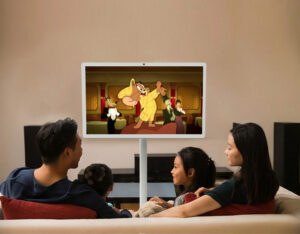
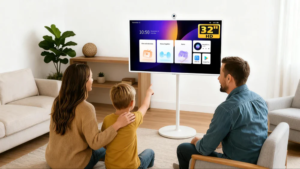
Smart Portable TV Display by Infochip Technology All-in-One AI Home Device
Various versions have evolved over then years, sometimes by accident, sometimes on purpose (injected humour and the like).

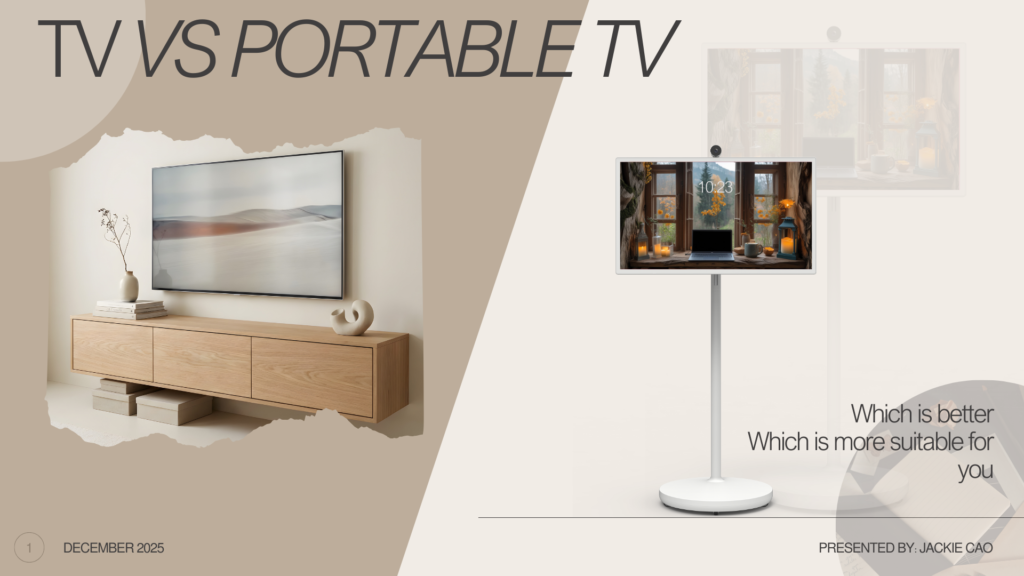
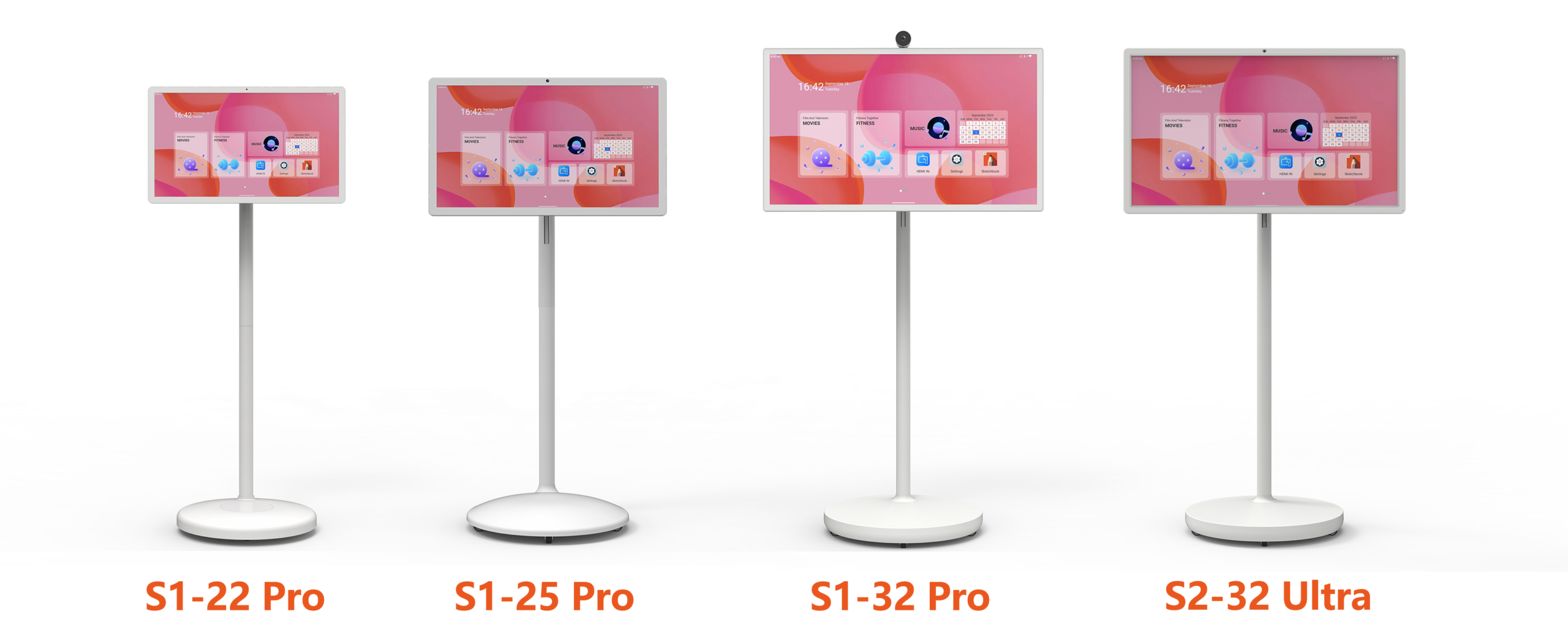
To meet the growing demand for a higher quality of life, traditional televisions have evolved into lightweight, portable, and feature-rich smart displays,with GFF 22/25/32-inch portable smart TVs especially gaining popularity.The moderate sizes offer a comfortable viewing experience while being compact enough to easily move around the houses or even outdoors.However, a key question remains: Can portable smart TVs truly replace the traditional televisions that we have relied on for decades?This article will explore the main differences between portable smart TVs and traditional televisions, helping you make an informed decision.
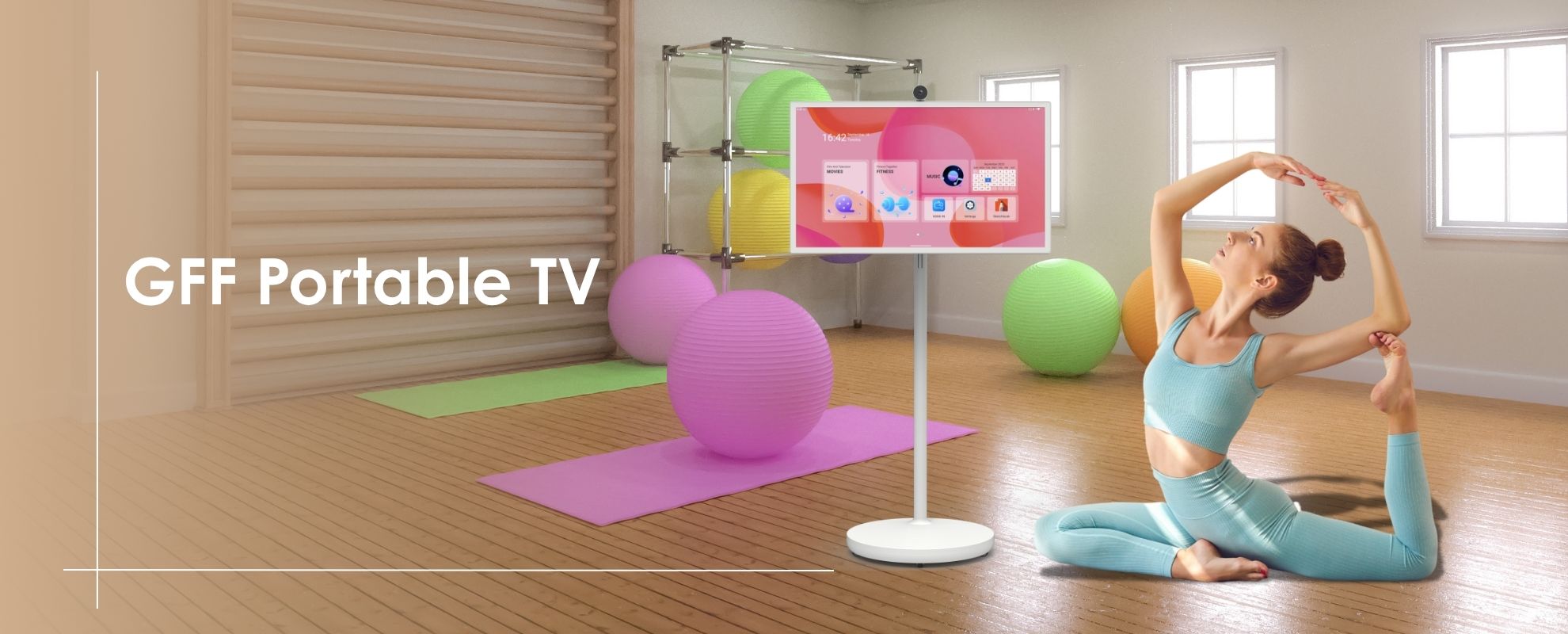
Portable Smart TV – A flexible and convenient smart TV that can be easily assembled with just a screen and a movable stand. It comes with built-in Wi-Fi, Bluetooth, and a rechargeable battery, allowing you to stream content seamlessly without any cables.
The smart tv on wheels also features screen mirroring, so you can cast TV shows anytime, anywhere. If you love outdoor adventures, this movable smart TV is your
idea choice. Simply take it outdoors, connect to Wi-Fi, and you can enjoy movies under the stars with your partners or sing along with friends. Below are its main advantages.
✔ The built-in wheels allow for easy movement indoors (living room, kitchen, or bedroom).
✔ Freely adjustable – the screen can tilt, rotate, or lift.
✔ Impressive battery life – up to 6-7 hours of usage on a single charge.
✔ Equipped with a large-capacity built-in battery.
✔ Wireless Streaming – Enjoy Netflix, YouTube, and more with the Wi-Fi-enabled portable smart TV.
✔ On-the-Go Entertainment – The portable smart TV for camping brings your favorite shows wherever you travel.
Truly delivers: Ready to use anytime, anywhere.
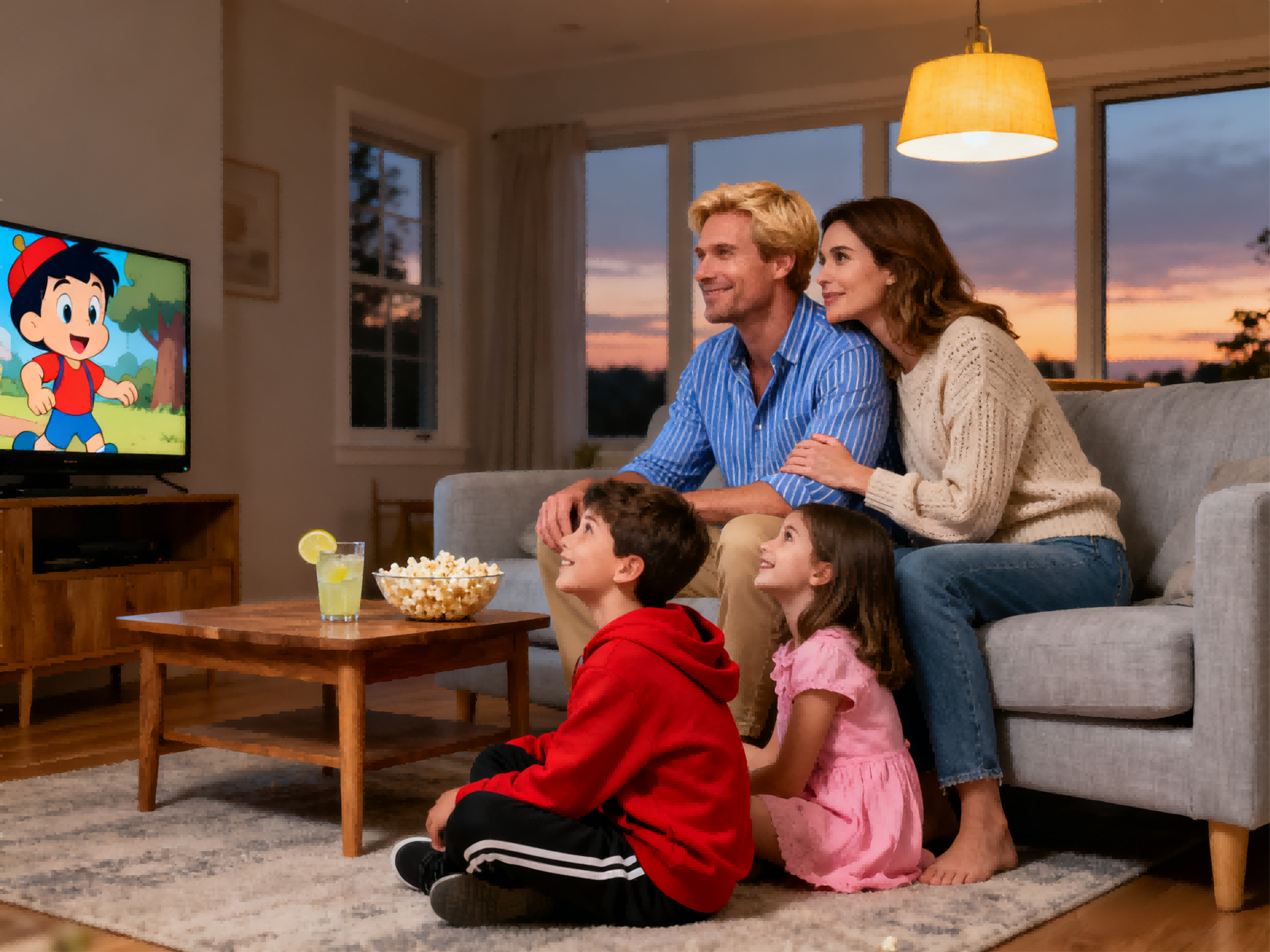
Traditional TVs are still a staple in most living rooms today. Their biggest advantage is that they bring the family together to watch movies, variety shows, or news.
The TV is not just a device but a bond that connects generations and holds warm memories.
From a technical perspective, modern TVs have significantly improved in picture quality and performance. Some high-end models support 4K or even 8K resolution,
with detailed images, true-to-life colors, and immersive sound systems, offering a home-theater experience. Stable performance and reliable signal transmission
keep traditional TVs dominant in “home use scenarios.”
However, compared to emerging smart screens, traditional TVs have obvious limitations. They are fixed – usually mounted on the wall or placed on a stand –meaning viewing positions are limited by the room layout and cannot be adjusted freely. TVs are designed more for “family sharing” rather than “personal use,” so they lack portability and interactivity.
Our GFF 22/25/32-inch portable smart screen TVs are created to break these limitations, allowing users to watch freely in different spaces and positions, offering a more flexible and personalized experience. If you’re interested in the smart screen, check out portable smart tv buying guide, which provides detailed selection criteria.
Portable Smart TV vs. Traditional TV: Key Differences
| Feature | Portable Smart TV | Traditional TV |
| Portability | Built-in wheels, easy to move | Fixed in one location |
| Size | 21.5, 24.5, 31.5″ | 32~98“ |
| Rosolution | 2k/4k | 4k/8k |
| Wireless connection | Wi-Fi, Bluetooth, Screen mirroring | Most mainstream smart TVs support Bluetooth,screen mirroring, and WiFi. |
| Power supply | Built-in rechargeable battery | By plugging in |
| Application | Family entertainment,homework, work,education,conference,advertising display,self-ordering,live streaming,outdoor camping, etc. | Home theater in living room |
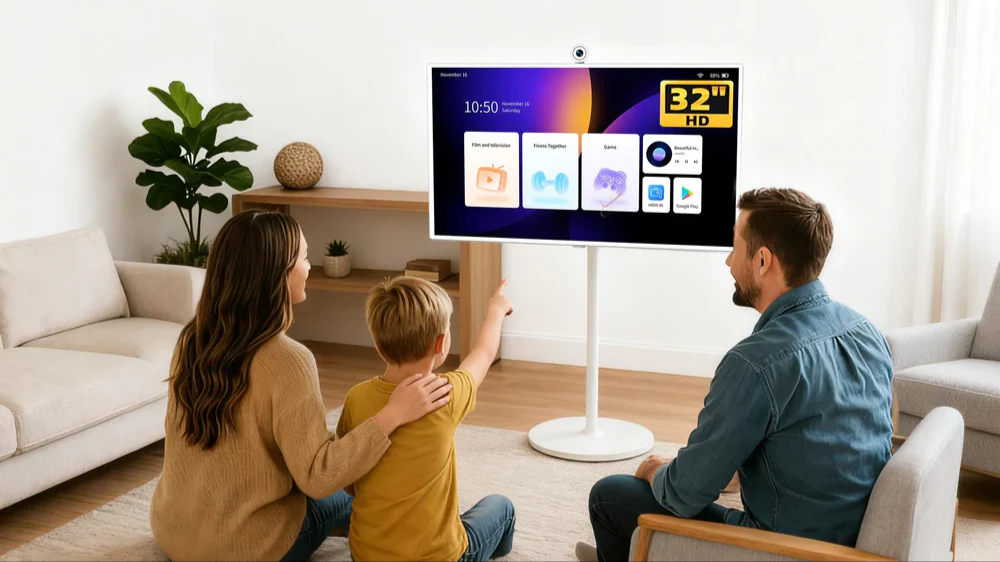
If you value flexibility and convenience and enjoy using your TV in different spaces or outdoors, the stand by me portable TV Screen is the best choice. It’s lightweight, smart,supports wireless casting, and offers long battery life. On the other hand, if you prioritize stability, a large screen, and a cinematic audio-visual experience, a traditional TV is more suitable for fixed installation, providing better picture and sound quality. Your choice depends on your functional needs and usage scenarios.
When choosing between a traditional TV and a mobile smart screen, the final decision depends on your usage needs and lifestyle. Traditional TVs still excel in
large-screen display and stable performance, making them ideal for fixed home entertainment setups and offering an immersive audiovisual experience. On the other hand, portable smart screen stands out with its flexibility, portability, and smart features, meeting the demands of modern users who seek mobility and versatility. Whether for home entertainment, business presentations, or outdoor activities, a portable smart screen can easily handle it all.